What was produced
Big idea
A senior CMO commands a seven-agent system, with judgment at every gate.
One brief, two runs: once through generic AI, once through Soundtrak's AI system and team, with both outputs published side by side. The visible difference between the two is the demonstration. The practitioner's deliberation behind that difference, the configuration, the send-backs, the brand verdicts, is the moat no generic tool can clone.
Key message
"Hiring a CMO is slow. Hiring an agency is generic. A practitioner with an AI team is the third answer."
Every concept in this system must survive a 15-second radio read, roughly 40 voiced words. Not because the ad will air, but because 15 seconds is a brutal forcing function for message clarity. If the proposition cannot survive a constrained read-aloud, it is not tight enough to ship. This is the script that locked the campaign's message:
[voice: the practitioner himself, plain read, no music]
"I built the marketing team I would hire. Several configured AI agents, each with a discipline, each gated by a senior marketer: the CMO seat at every gate, whether that's me running it for you or your own marketer running it. No black box, always a human in the loop when it matters."
Marketing plan
Four workstreams, one proposition. Each phase of the plan ships as finished assets, a selection of which are shown below.
- The landing page live
- Free tools behind it: anti-slop checklist, readiness audit, sub-edit tool
- A weekly newsletter to promote it
- Pitch deck with notes
- Battle cards: seven buyer segments, ten objections
- Five outreach emails and four case studies, this page among them
- Noise-to-Signal video series: four concepts, two aspect ratios, eight finals
- Storyboards approved before a frame was rendered
- Code-driven animation, no stock footage
- Weekly AI-marketing articles
- Each article paired with a LinkedIn promo and a personal post
- YouTube companions coming soon
Key assets
Real assets from the campaign, exactly as they shipped, every one produced by the system this page describes. 29+ assets, the selection below runs from storyboard to sales deck to the email that booked the first meetings.
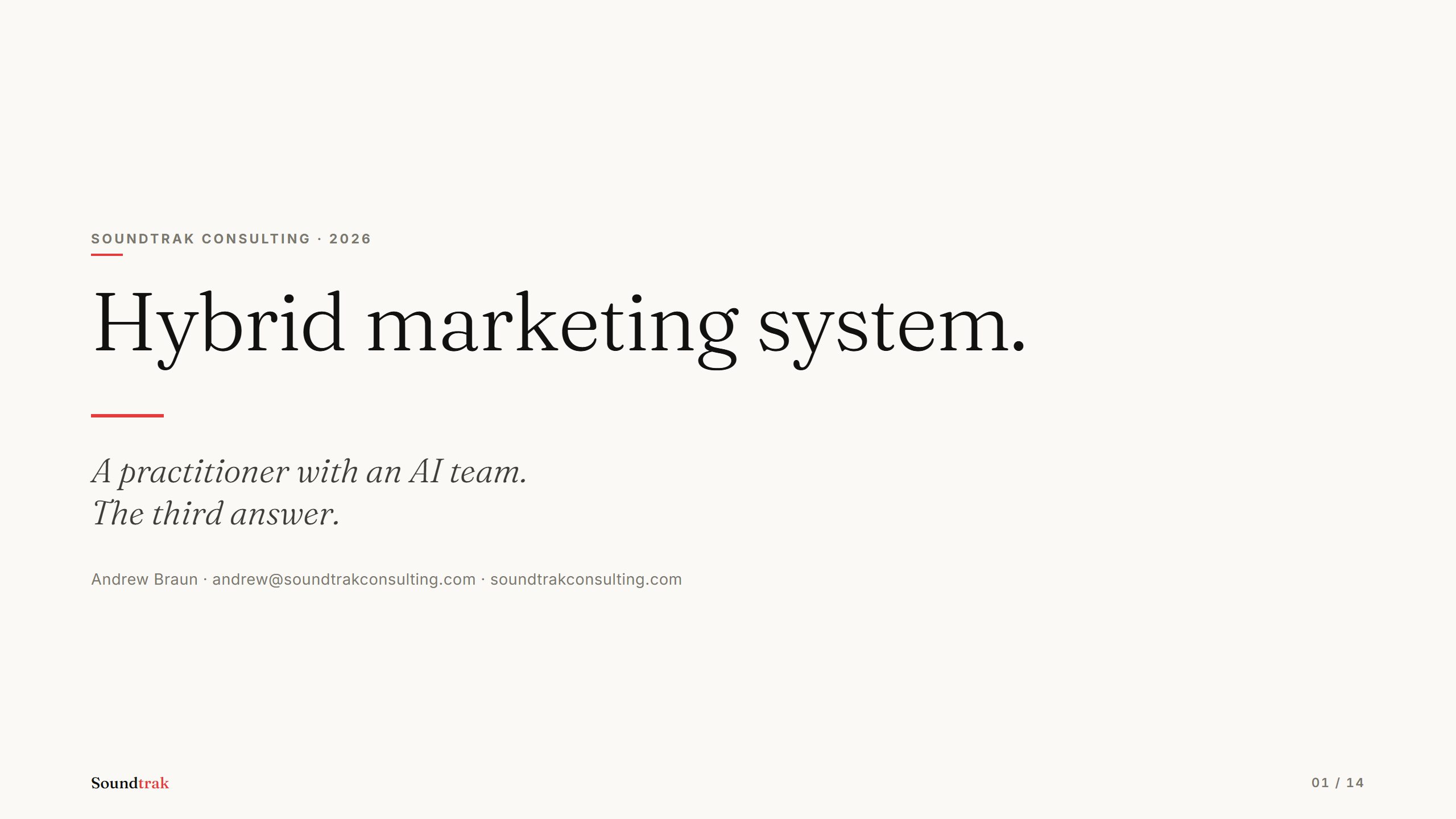
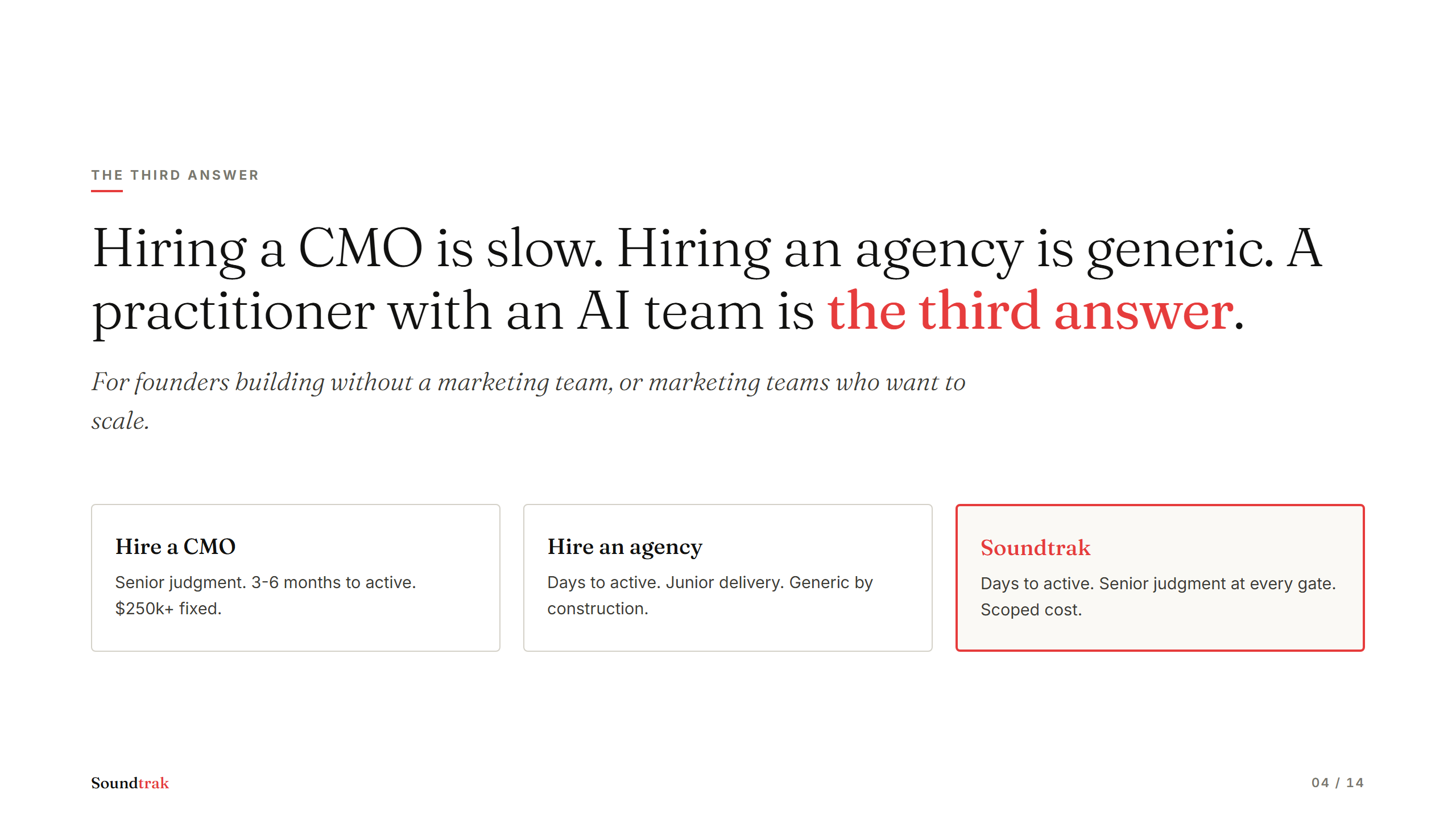
The 14-slide pitch deck. Built around a 7-act narrative arc, shipped as HTML plus PPTX with presenter notes. Shown: the cover and the "third answer" argument slide. Approved 4 June 2026.
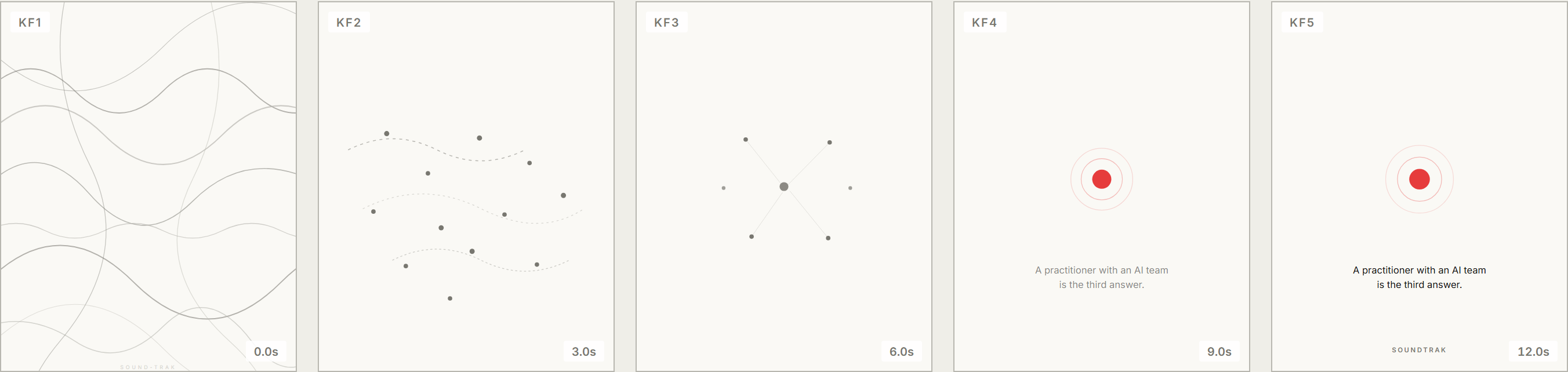
Storyboards before pixels. The Noise-to-Signal video series was approved as keyframe storyboards before a single frame was rendered. Shown: the V1 strip that locked the visual grammar for all eight finished videos.
The finished animation. The V4 "visible state" video, playing here (the most recent of the eight finals): noise resolves into an open eye with one red signal — the campaign's "no black box, always a human in the loop" line made visual. Code-driven animation, no stock footage, shipped in two aspect ratios for Reels, feed, LinkedIn and Shorts.
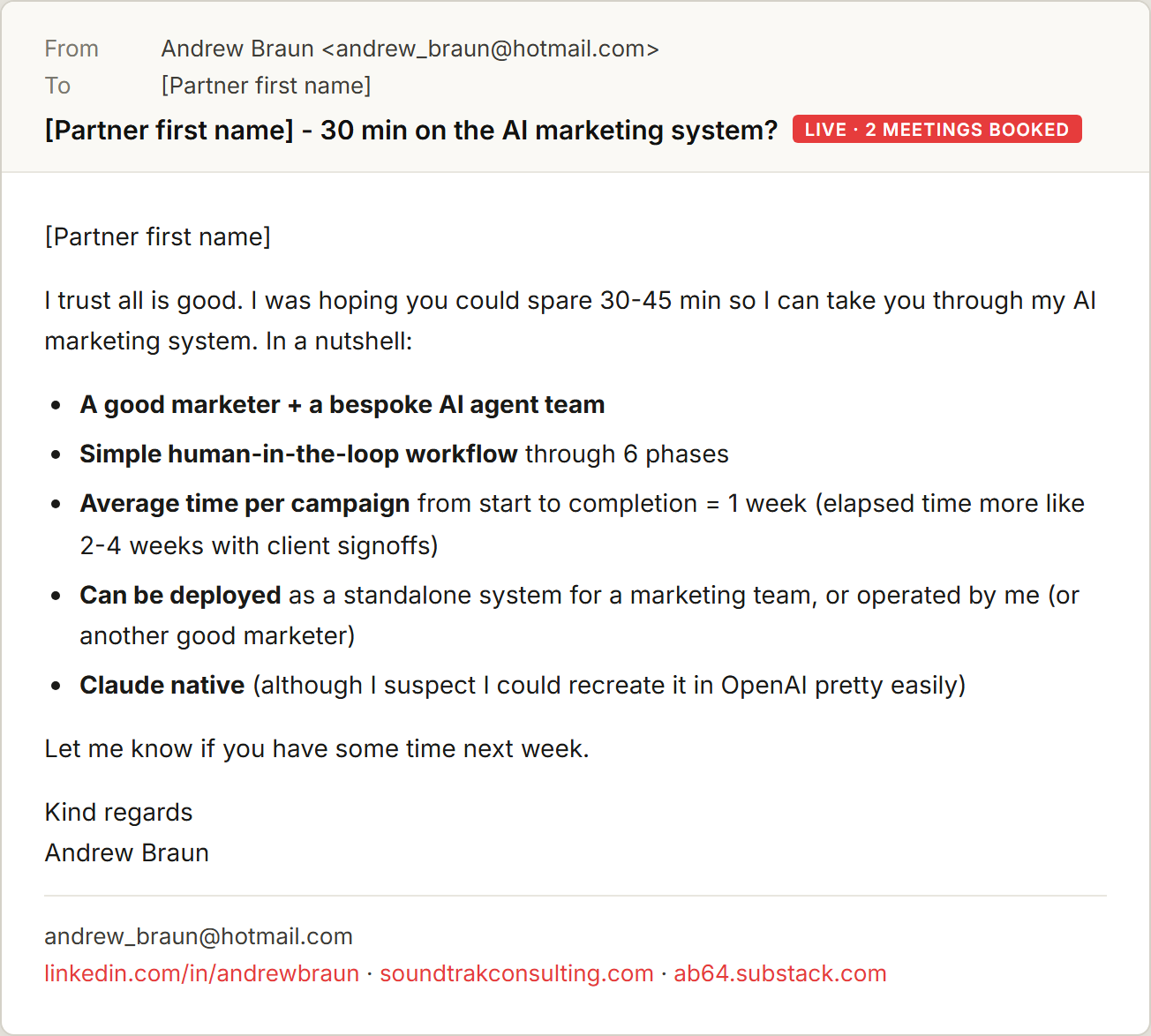
The email that booked the first meetings. The live partner outreach email: drafted by the operator, sub-edited by the system, approved at gate. The first sends produced two partner meetings, the campaign's earliest conversion evidence.