Most marketing teams that "do agile" are actually doing a watered-down version of it - a task board with no retrospectives, stand-ups that are actually status updates, and sprint planning that's just a list of things that need doing anyway. The form without the function.
The actual discipline of agile marketing creates two things that most marketing teams don't have enough of: transparency about what's happening and why, and a structured mechanism for changing course when things aren't working. Done properly, it surfaces blockers early, makes trade-offs visible, and creates a culture where stopping a campaign that isn't performing is a decision, not a failure.
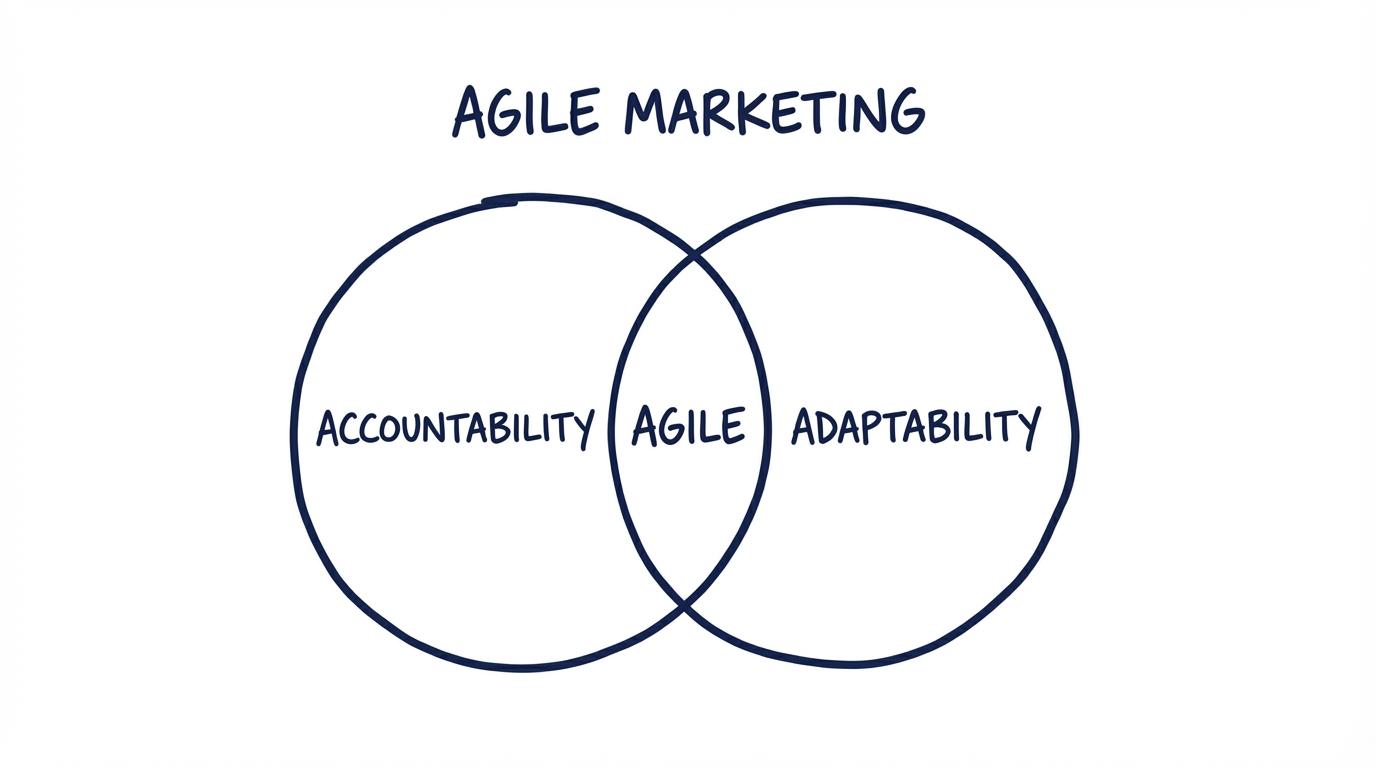
Accountability without adaptability is rigidity. Adaptability without accountability is chaos. Agile, done properly, is what happens at the intersection.
What agile marketing actually requires
- Two-week sprints with tasks sized to 2 hours to 2 days - anything bigger is too vague, anything smaller creates admin overhead
- Daily stand-ups that surface blockers and dependencies, not status updates
- User story format: "As a [role], I want to [action] so that [benefit/outcome]" - forces teams to articulate the why before the what
- Retrospectives every quarter on ongoing programmes: what should we start, stop, and continue?
- Genuine sprint showcases where teams share work in progress - which forces quality and creates cross-team awareness
Common mistakes
- Tasks that are too big - "create strategy to increase sales" is not a task, that's an outcome. Break it down until each task is completable in 2 hours to 2 days
- Tasks that are too small - excessive granularity creates admin overhead and makes the process feel like surveillance, not support
- Using stand-ups as status updates instead of blocker and dependency identification - if no blockers are raised in a week, the process isn't working
- Not including strategy and research time as legitimate sprint tasks - these get squeezed out, then people wonder why the team is only executing and never thinking
- Creating pressure or fatigue by making every minute visible - people need space to think. Celebrate wins, not just velocity
- Not accounting for meetings, BAU work, training, and leave - a sprint plan that assumes 100% productive time will fail every time
- Planning too far ahead - agile loses its value when you're locked into a twelve-week plan. Two weeks is the horizon. Anything beyond that is directional, not committed
- The manager not empowering the Scrum Master role to enforce the process - if the Scrum Master can't push back on scope creep or task sizing, the whole discipline collapses
Related concepts
- Scrum methodology - the formal framework agile marketing borrows from, including sprint ceremonies, roles (Product Owner, Scrum Master), and backlog management
- Kanban boards - a visual alternative to sprints, useful for teams with more unpredictable work volumes where fixed sprint cycles are hard to maintain
- Objectives and Key Results (OKRs) - complements agile well: OKRs set the directional goal, agile sprints are how you work toward it. Two-week sprints inside 90-day OKR cycles is a common and effective combination
- 90-day planning cycles - a rhythm that balances the short-term flexibility of agile with the longer-term strategic intent that annual plans can't sustain