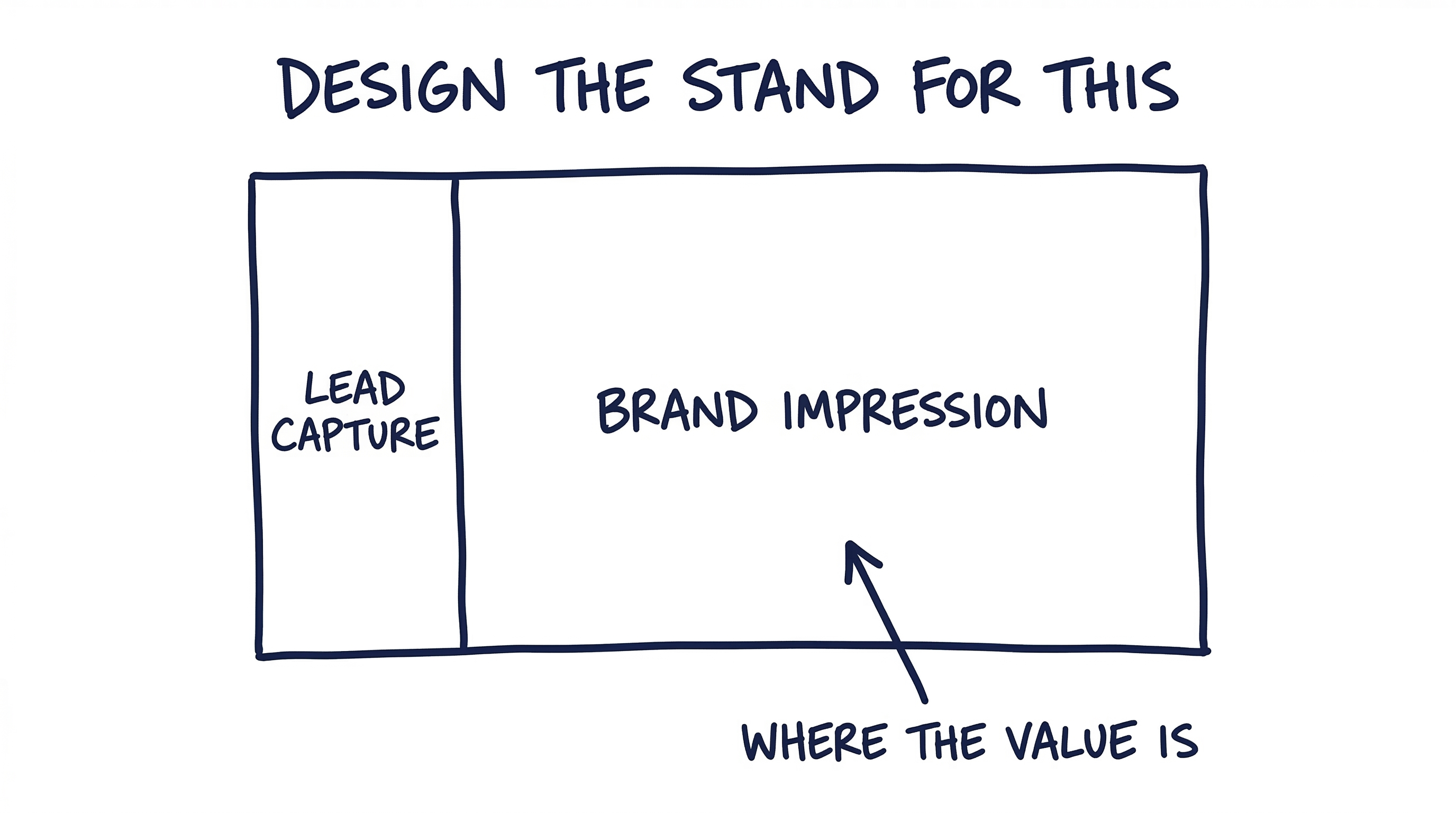
The dominant assumption in event marketing is that a stand exists to generate leads: attract attention, collect badges, follow up. That assumption drives most of the decisions - competitions designed to bring people over, merchandise used as bait, stand layouts optimised for conversation capture.
The problem is that optimising for active buyers ignores the vast majority of the room. The 80–95% who are not actively in-market will walk past your stand, form an impression, and move on. That impression - positive, negative, or forgettable - shapes whether they think of you when they eventually are in-market. The passive audience is your future pipeline. Designing a stand that works only for active buyers is designing for a fraction of the opportunity.
80–95% of people in an expo hall will never stop and talk to your sales team. Design the stand for them - not for the five percent who will.
What designing for the passive audience looks like
- Visual dominance over functional complexity - a stand that stops people in their tracks is doing more work than one that requires engagement to make an impression
- Aesthetic that signals brand values - the stand should communicate who you are without anyone needing to talk to you
- Merchandise that earns rather than attracts - curated, quality items that reflect the brand, not generic giveaways designed to draw traffic
- Sales team appearance as brand signal - how your people look and carry themselves is part of the impression
None of this means ignoring lead capture. It means recognising that the stand has two jobs, and most teams only optimise for one of them. The five percent who are ready to talk deserve a great conversation. The ninety-five percent who aren't deserve a great impression. Both are worth designing for.